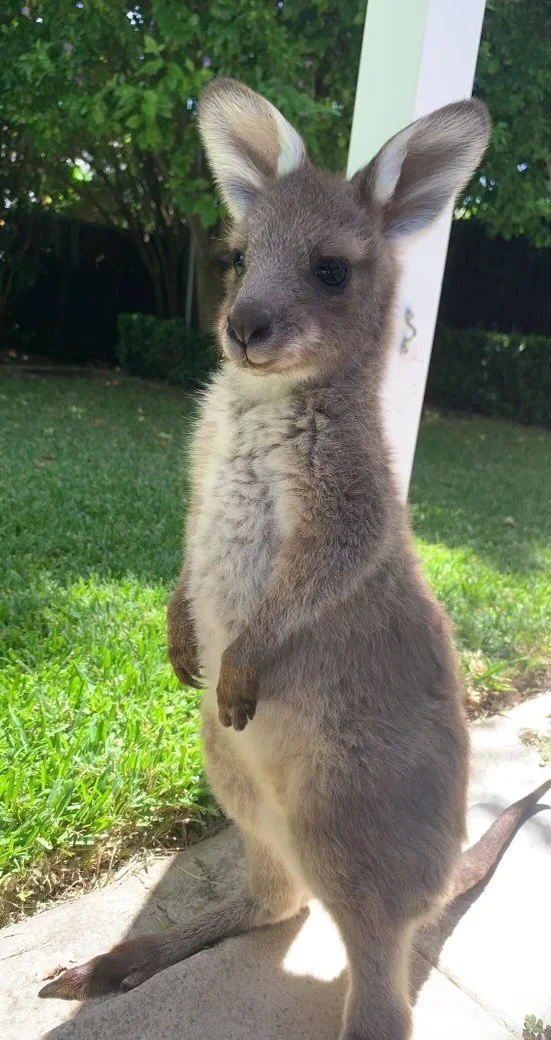
The Real Maxie Roo
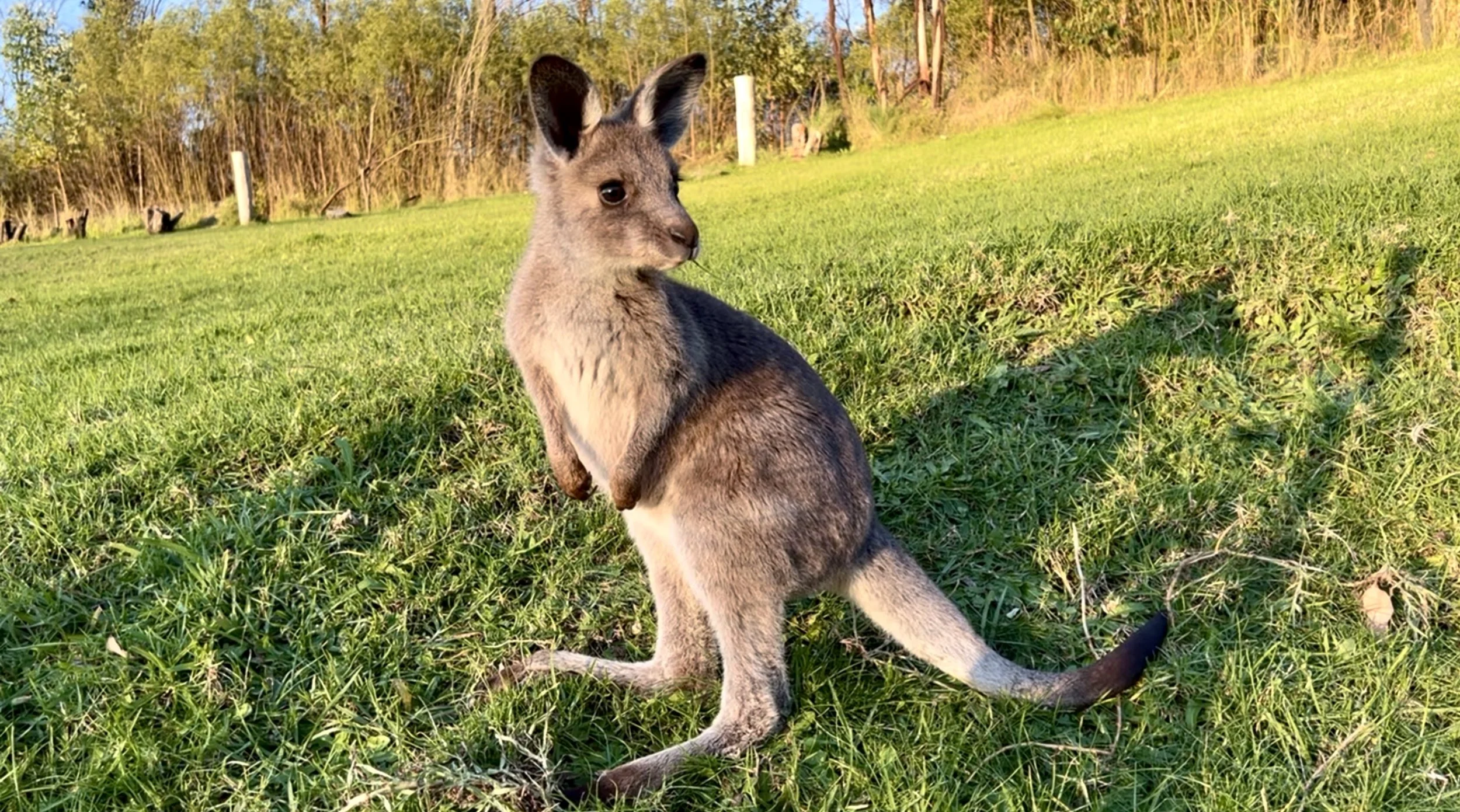
Photo of Maxie Roo at 14 months old, weighing a little more than 10kg (22lbs)
I’m going to try not to be too wordy with these real-life stories, because I know you’re really here to see the photos and watch the videos.
To say little Max changed my life is a bit of an understatement.
I cared for animals throughout my childhood, guinea pigs, rabbits, cats, dogs, monkeys, and even horses, but none of that ever compared to raising an Eastern Grey Kangaroo here in Australia. My love for these unique Australian icons knows no bounds.
Of the 60 different species of kangaroos and wallabies across Australia, it is my understanding that Eastern Greys are among the most sensitive and fragile. You need a licence to care for wildlife, along with specialised training for macropods, and there is a strong community of wildlife carers constantly sharing knowledge and experience.
Because they can easily die from stress, raising an orphaned joey requires constant, around-the-clock care. A baby kangaroo like this one spends the first nine months of its life tucked safely inside its mother’s pouch, kept warm, cleaned, and comforted by the rhythm of her heartbeat, and remains closely bonded to her for many months after that. I’ll share more about that in the “Meet Indie” section when I talk about her becoming a mother herself.
Let’s start at the beginning.
I took on the responsibility of raising Max in January 2022. He weighed 1.8 kilos (less than 4 lbs), was only just furred, and at seven months old would have only recently begun venturing in and out of his mother’s pouch.
How he became separated from his mother is still unclear, but had someone not alerted our local wildlife rescue group, he would not have survived for very long.
You often hear about alpha male kangaroos, but what many people don’t realise is that not all males become alphas. Most grow large, but only a few develop the size and strength of the dominant males.
We knew from the start that little Max was destined for greatness.
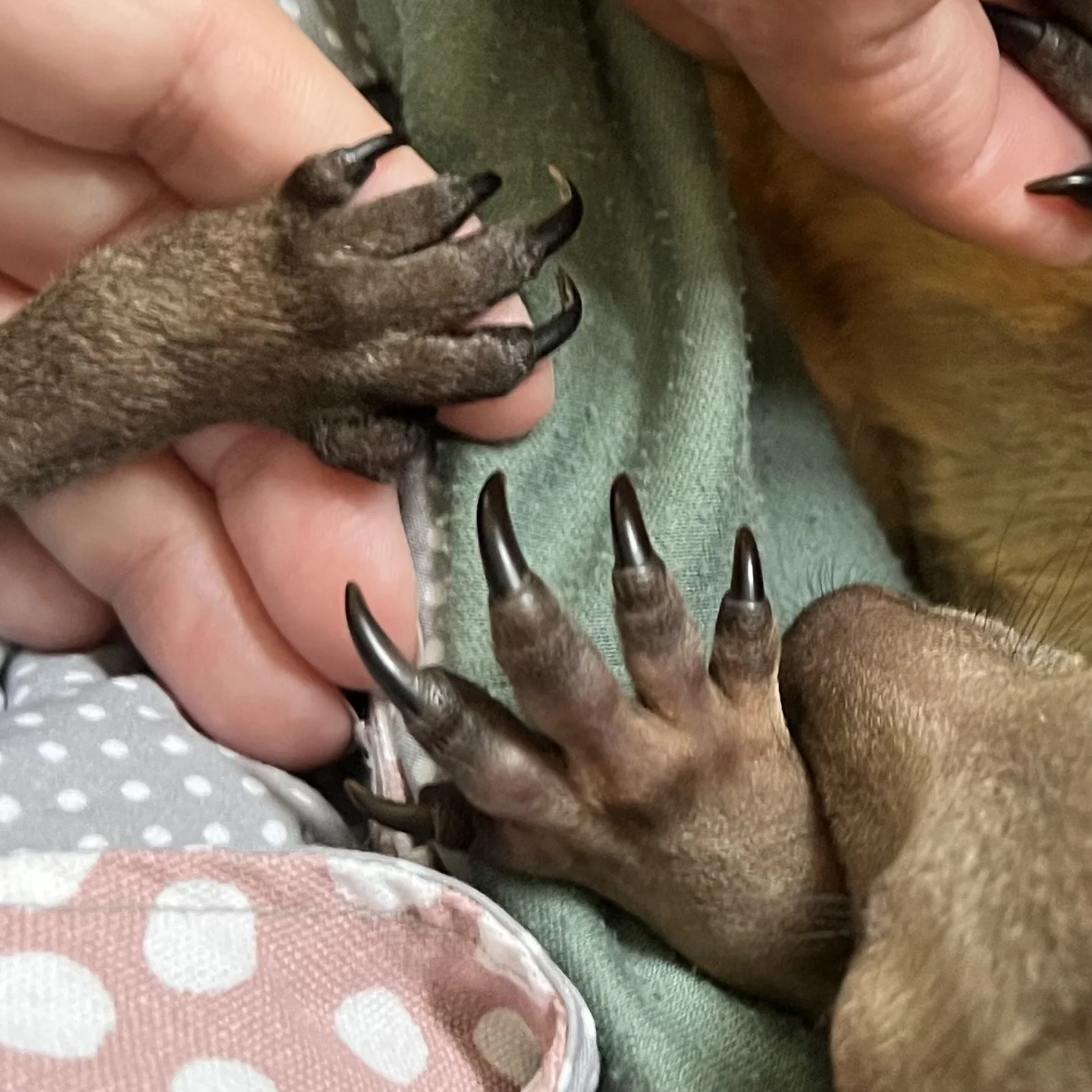
Even as a baby, he had enormous hands. The hand at the top of this photo belongs to Coby, who was a month older than Max at the time.
This was Maxie’s first day at Red Rabbit Farm, our wildlife oasis in NSW. In those first few days in care, a baby joey will often call out for their mum, making a little heartbreaking sound that almost resembles a stuttering cough. (I’ll share that in a different post.) Even so, he was eager to practice his hopping. They are so happy to follow long legs around.
Wildlife carers spend a lot of time paying attention to pee and poo. It is often the first sign when something isn’t quite right, especially with these little bubs.
Bottle feeding is serious business.
Kangaroos can’t drink cow’s milk. Remember what I said about them being fragile? Their milk is completely different. A mother kangaroo produces different milk at different stages, adjusting the levels of fat and protein as her baby grows.
How someone figured all that out, I don’t know. Thankfully, they did. There are only two companies I know of that produce these specialised kangaroo milk formulas for wildlife carers.
The milk is expensive, but it is essential for their survival.
We follow detailed charts to determine which formula a joey needs, how much to give, and how often throughout the day and night.
That’s Max on the left, with Coby on the right, happily gobbling up their mid-morning bottles.
After Maxie’s 5am feed one morning, he was busy with some fur maintenance and a good stretch. I just happened to be filming at the time when he let out a rather loud fart.
The expression on his face as he swivelled around, trying to work out where that sound had come from, was absolutely priceless! There were many more farts over the years, but this one was a complete surprise to him. I, of course, was trying to stay very quiet as my husband was sleeping in the next room, but I still let out a little squeak of laughter.
When a kangaroo is little, we refer to it as a joey. In fact, that’s true for all baby marsupials. Marsupials are animals that carry their underdeveloped young in a pouch, and their babies are known as joeys.
This term applies to a wide variety of Australian and American marsupials, including kangaroos, koalas, wombats, wallabies, possums, bilbies, quokkas, bandicoots, and even Tasmanian devils.
When a joey hangs its head out of its mumma’s pouch while she is bent over grazing, it does a lot of tasting. The very first thing they eat is dirt. The fungi in the soil helps their tummy so much that later in life, when kangaroos aren’t feeling well, they are often seen eating dirt again.
From there, they begin to browse, grabbing at dry leaves, small sticks, and eventually grass.
As a human kangaroo mumma, it’s so important for their gut health that we make sure they have access to all of those same “foods,” even when we aren’t playing together outside. They also love the feeling of safety that comes from being in a pouch, even a cloth one.
This video was taken on a particularly wet, gloomy day when I brought a little indoor picnic inside, since being outdoors wasn’t an option. Mmmmm… grass roots caked in dirt.
How happy are these two?
(Max on the left, Coby on the right.)
It wasn’t long after Max arrived that it became clear Coby wasn’t developing as she should.
We took her to a highly specialised wildlife veterinarian, who diagnosed her with a bone disorder. He had us give her calcium and Vitamin D in the hope that we might be able to strengthen her bones, but unfortunately it wasn’t enough. The angels came and took her away on the 22nd of February. We were all crushed.
Max had bonded so quickly with her that he fell into a depression. We made sure he was never alone, giving him constant care and attention to help him through this second big loss in his life.
Remember how I mentioned the wildlife caring network?
Not long after Coby’s passing, the wonderful kanga-mum who had been looking after Indie reached out to me. She suggested bringing Indie to Red Rabbit Farm to be Maxie’s new childhood companion. Indie had been rescued from the middle of the road, not far from our property, after her mother was killed in a car accident before she even had fur. At nine months old, she was just a little older than Max.
This is the photo she sent me.
Two weeks later, Max and Indie met for the first time.